Composer by training. Signal processor by necessity.
Echograph began with a composer's problem: wanting to realize works whose tools didn't exist yet. Jacob Sundstrom, who leads the studio, came to signal processing that way — a BA and MM in music composition led to a PhD in computer music with a dissertation on periodicity transforms in discrete-time audio. That work sits at the border of mathematics and listening, and it's where we still spend most of our time.
Jacob's music has been played by ensembles including Inverted Space, the JACK Quartet, and the Seattle Chamber Players, in places as varied as the National Gallery of Art and Radiophrenia in Scotland. The last several years have leaned toward installation work, sound built into spaces rather than staged in them. Alongside that practice, he has spent years consulting on audio and signal-processing problems for other artists and institutions including writing real-time systems, redesigning electronics for existing works and building software that didn't exist until someone needed it.
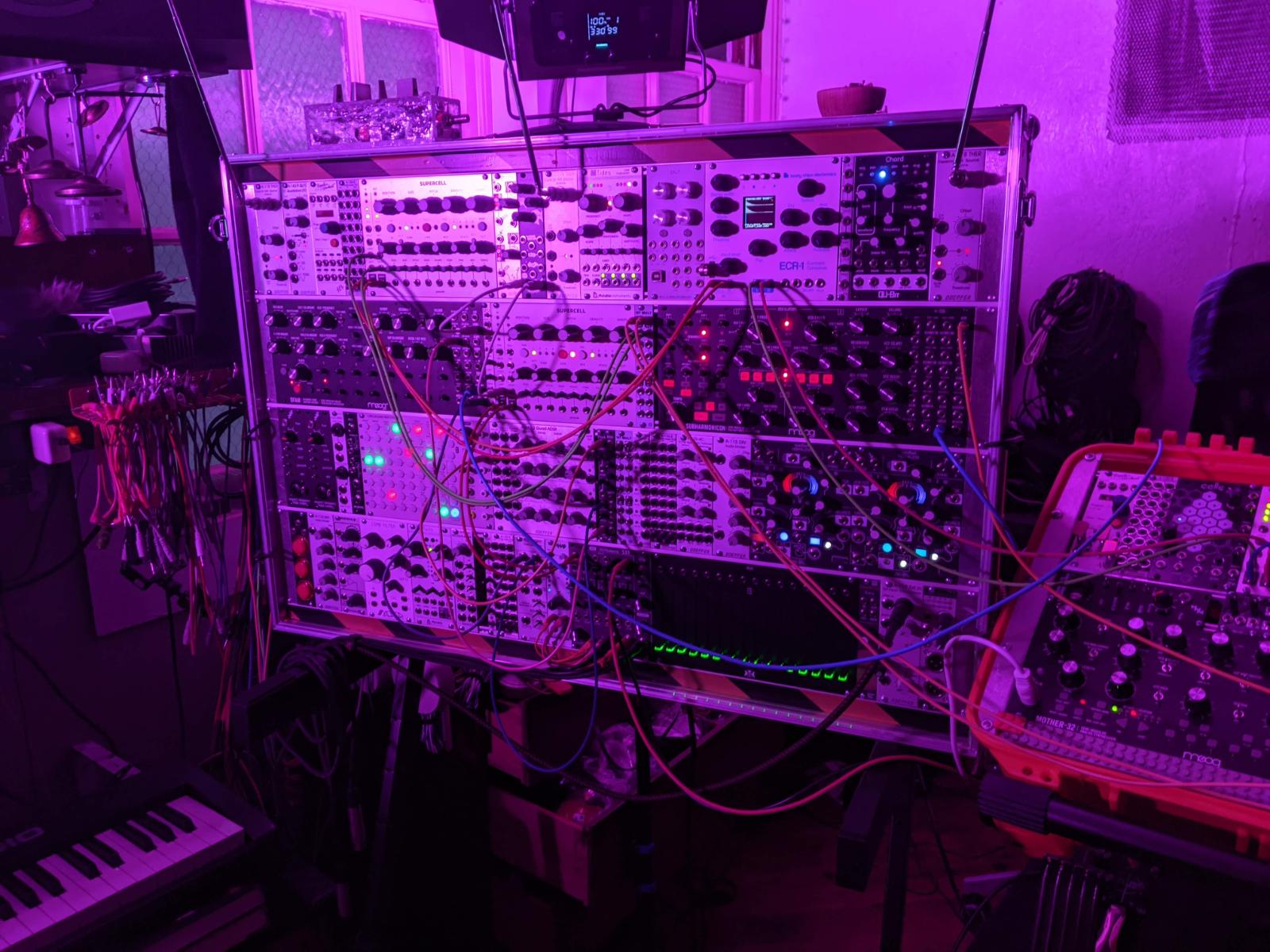
This has included collaborative work with composers such as Roger Reynolds and Alvin Lucier, performances with red fish, blue fish, and projects alongside percussionist Steven Schick. That same background has also led to research on brain-computer musical interfaces (published in Frontiers in Human Neuroscience) and spatialization algorithms (published in IEEE), and to consulting work on EEG research more broadly.
Echograph is small by design and elastic by necessity: when a project needs more hands — a second developer, a hardware engineer, extra performers — we bring in collaborators we've worked with for years. If you have a problem that doesn't have an obvious answer, we're probably interested in hearing about it. The weirder the better.